My Introduction to Roketsu-zome
A quiet alleyway, away from downtown Kyoto. A door I had come looking for. And behind it, a world that literally enchanted me.
It was there, during a solo trip dedicated to exploring Japan and its textile traditions, that I discovered modern roketsuzome.
In a world where everything tends to become uniform, there was something deeply precious about this workshop: here, the artistic gesture still had time to exist. The hand, the brush, the wax, and the fabric entered into a dialogue whose outcome could never be entirely predicted.
What immediately fascinated me was this back-and-forth between mastering the gesture and letting go. You have to be precise: hold the brush, apply the wax with precision, and build your design. And yet, you also have to be willing to let go of the idea of a perfectly calibrated, perfectly controlled result.
Because once the wax is applied, it retains an element of mystery. As it cracks, it will in turn determine where the color can seep in and where the cracks will appear.
Yet this is not entirely a matter of chance. Multiple layers of wax allow the artist to experiment with depth, texture, and the way the color will emerge. But no two layers will ever be exactly alike. The technique is masterful, while its result remains unpredictable.
It is precisely this tension that drew me to roketsuzome: the possibility of creating with precision while leaving room for the unpredictable.
The hand provides the impetus. The material carries on the work.
And perhaps that is where the beauty of this technique begins.
Roketsuzome and Indonesian batik: two different traditions
At first glance, the process seems almost identical. A piece of fabric, some wax, a dye bath. Where the wax has settled, the dye does not penetrate. Then comes the removal of the wax, and with it, the pattern is revealed.
Japanese roketsuzome and Indonesian batik thus belong to the same broad family of wax-resist dyeing techniques. Yet behind this technical kinship lie two distinct histories, two sensibilities, and two ways of engaging with textiles.
The Story
The history of roketsuzome has its roots in ancient Japan. As early as the Nara period (710–794), rōkechi—a wax-resist dyeing technique—is attested in textiles preserved, notably, at the Shōsō-in. Over the centuries, however, this practice gradually disappeared.
It wasn’t until the Meiji era, beginning in 1868, that interest in wax-dyeing techniques was revived. As Japan opened up to the world and rediscovered Asian textile craftsmanship, the process was studied, reinterpreted, and gradually transformed, ultimately giving rise to modern roketsuzome.
Indonesian batik, meanwhile, has its own unique history. Particularly well-developed in Java, it has, over time, become much more than just a dyeing technique: it is a true textile language, rooted in a rich array of technical, social, and symbolic traditions.
Roketsuzome and batik are therefore not two versions of the same tradition. They have evolved along distinct paths, while intersecting and influencing one another at certain periods in their history. It was particularly during the revival of roketsuzome in the Meiji era that exchanges with Asian textile techniques—including batik—became especially noteworthy.
Tools
The difference is also evident in the tools—and thus in the actions they enable.
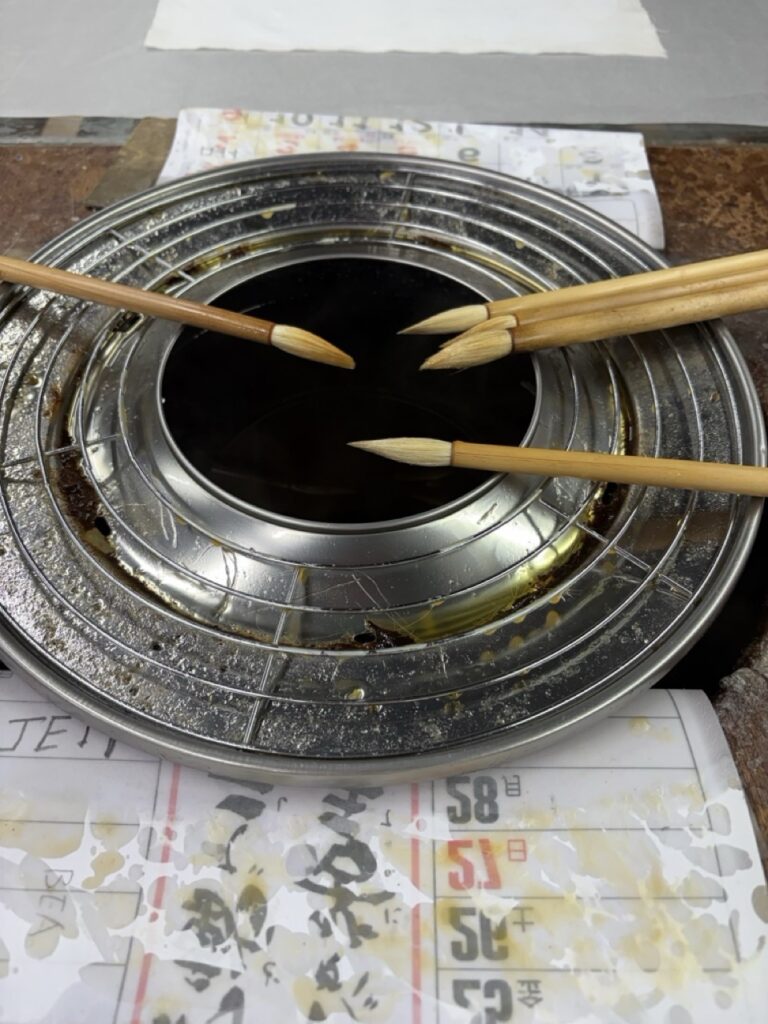
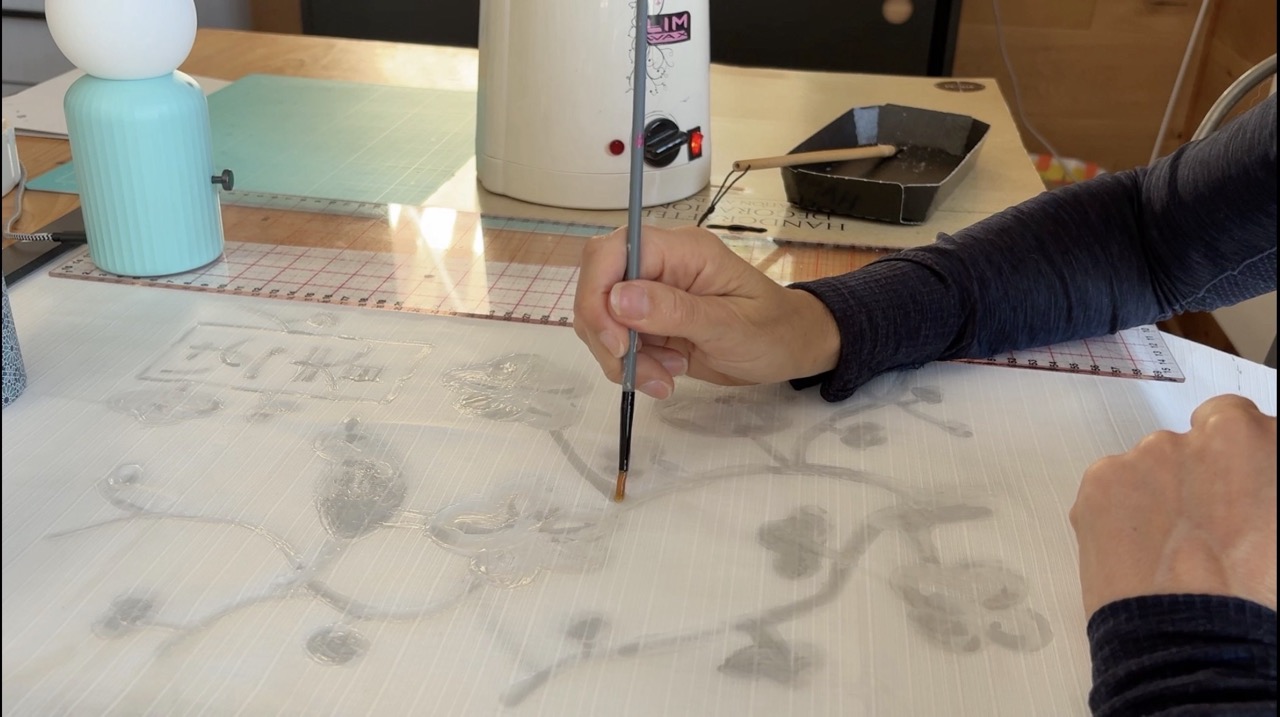
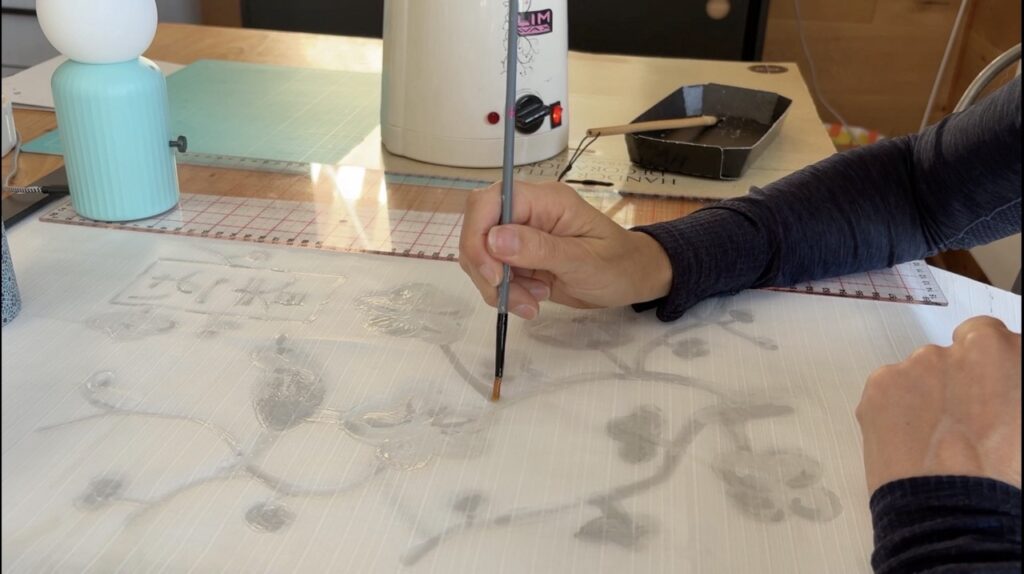
In roketsuzome, the brush plays an essential role. Laden with hot wax, it glides directly across the fabric. The line can grow thicker, become finer, waver, or take on a more decisive quality. The wax then becomes almost an extension of the hand, and the design can take on a very free-flowing quality, similar to painting.
However, the process is not limited to the brush: roketsuzome can also involve the use of stencils or wax splattering, opening the door to other textural and material effects.
In traditional Indonesian batik, the artist’s touch is expressed in particular through the canting, a small tool used to apply wax in fine, precise lines. Alongside it, the cap—a copper stamp—is used to reproduce the patterns with consistency.
From one tool to the next, the technique changes. And with it, the way the pattern takes shape on the fabric.
Graphic Traditions
Beyond the tools themselves, it is two distinct approaches to design that come together.
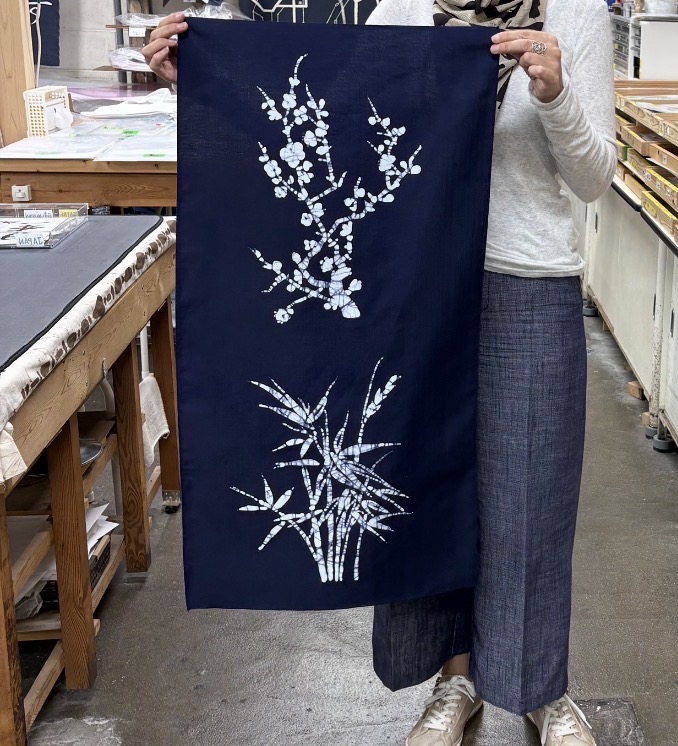
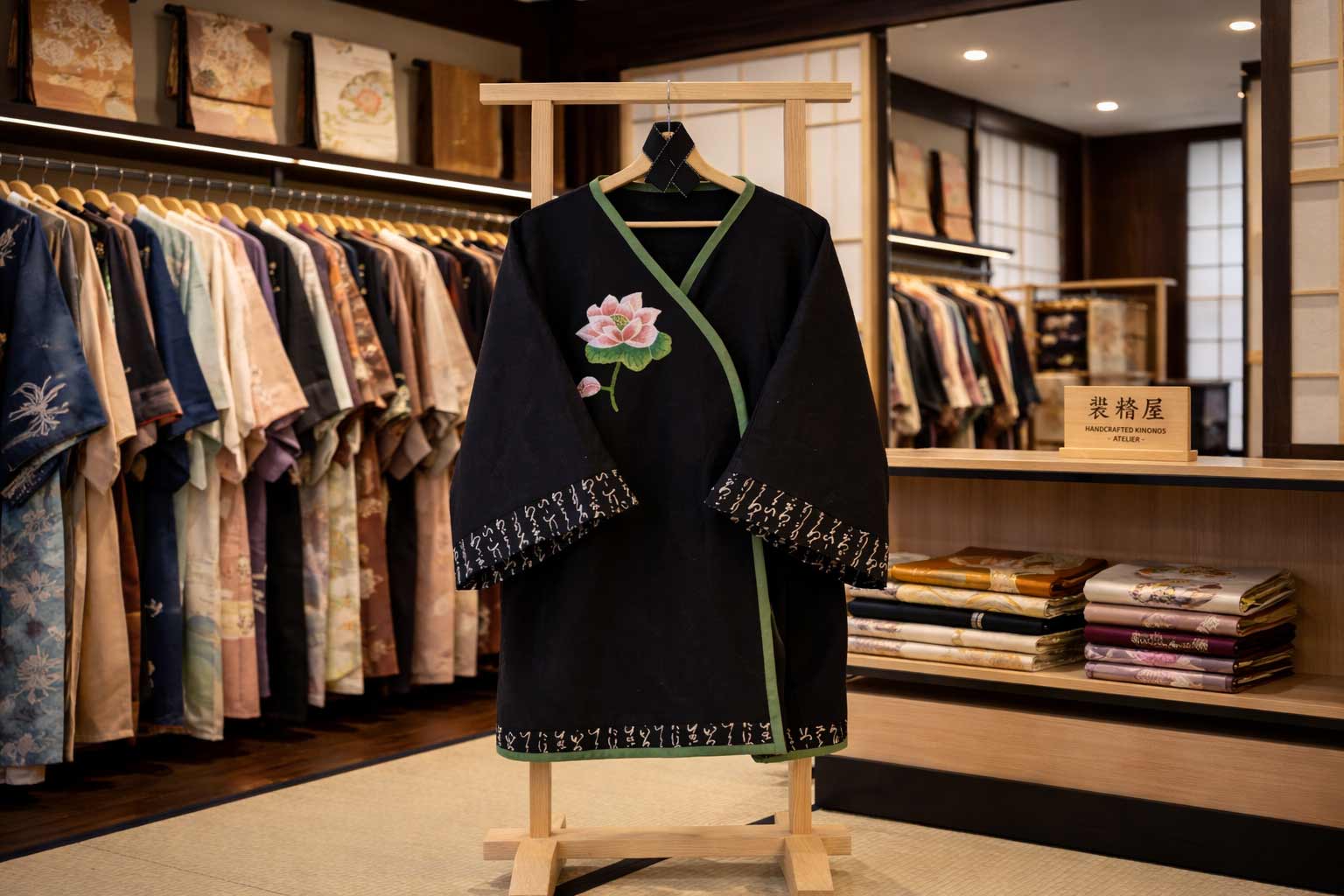
In roketsuzome, the design can be thought of as a composition. It often has a close connection to nature and Japanese aesthetics: flowers, foliage, water, landscapes, seasonal elements, or geometric patterns can be arranged on the fabric just as they would be in a painting.
Indonesian batik—and Javanese batik in particular—also draws heavily on the natural world. However, its patterns often follow more codified decorative and symbolic systems. Some designs carry a story or a specific meaning, and historically, certain patterns could even be associated with social status or specific circumstances.
Thus, while both traditions may draw from the same source—nature, the world around them—they do not describe it in the same way.
Work Style
This is perhaps where the difference becomes most noticeable.
Roketsuzome readily reveals the artist's hand and the fabric's reactions. Traditional Javanese batik, on the other hand, often places greater emphasis on composition and the repetition of the pattern.
Two ways of working with color. And above all, two approaches to textiles: one in which the artist’s gesture and the material’s inherent qualities can become an integral part of the work, and the other in which mastery of the pattern and its reproduction often take center stage.