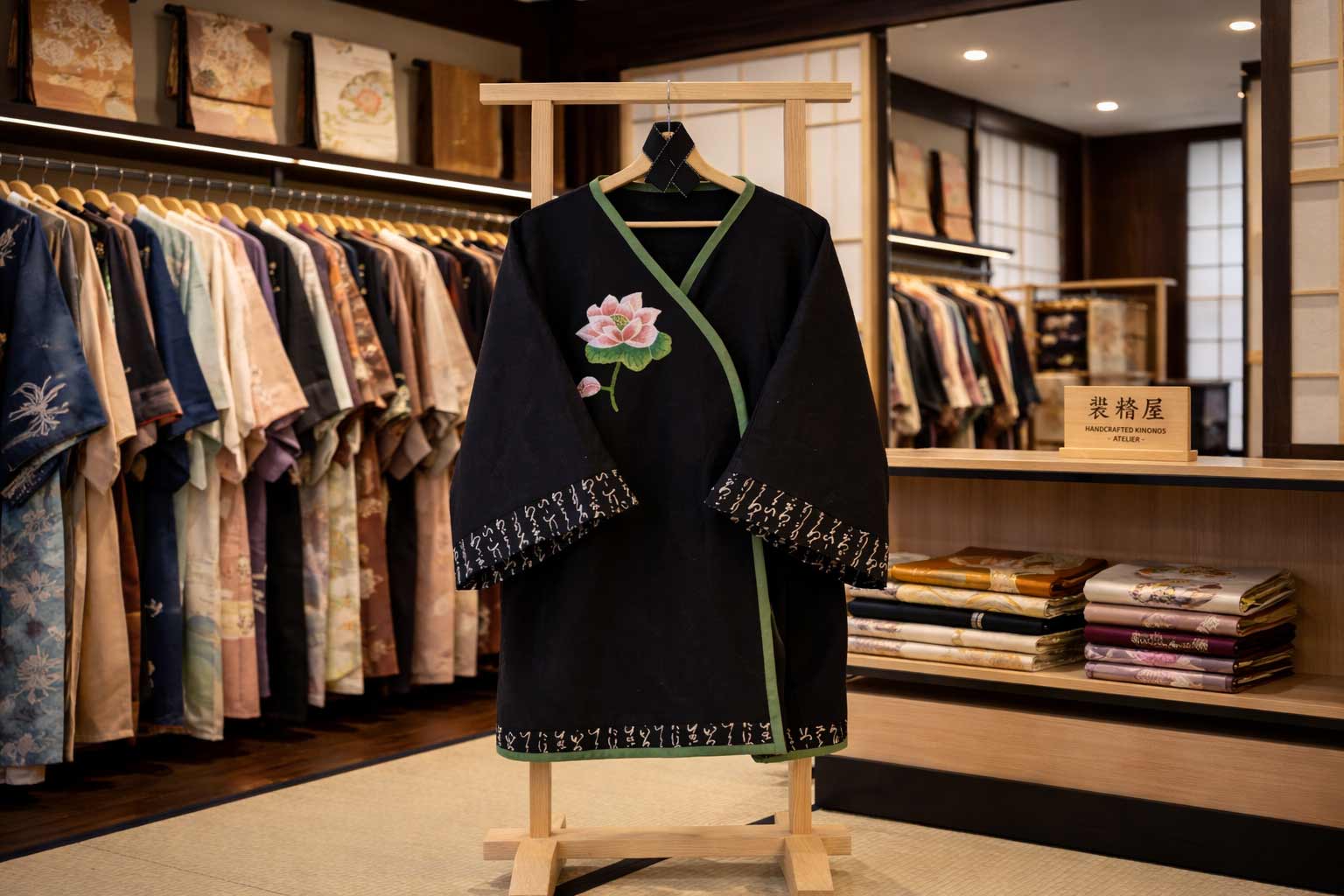
I was recently working on a prototype linen kimono.
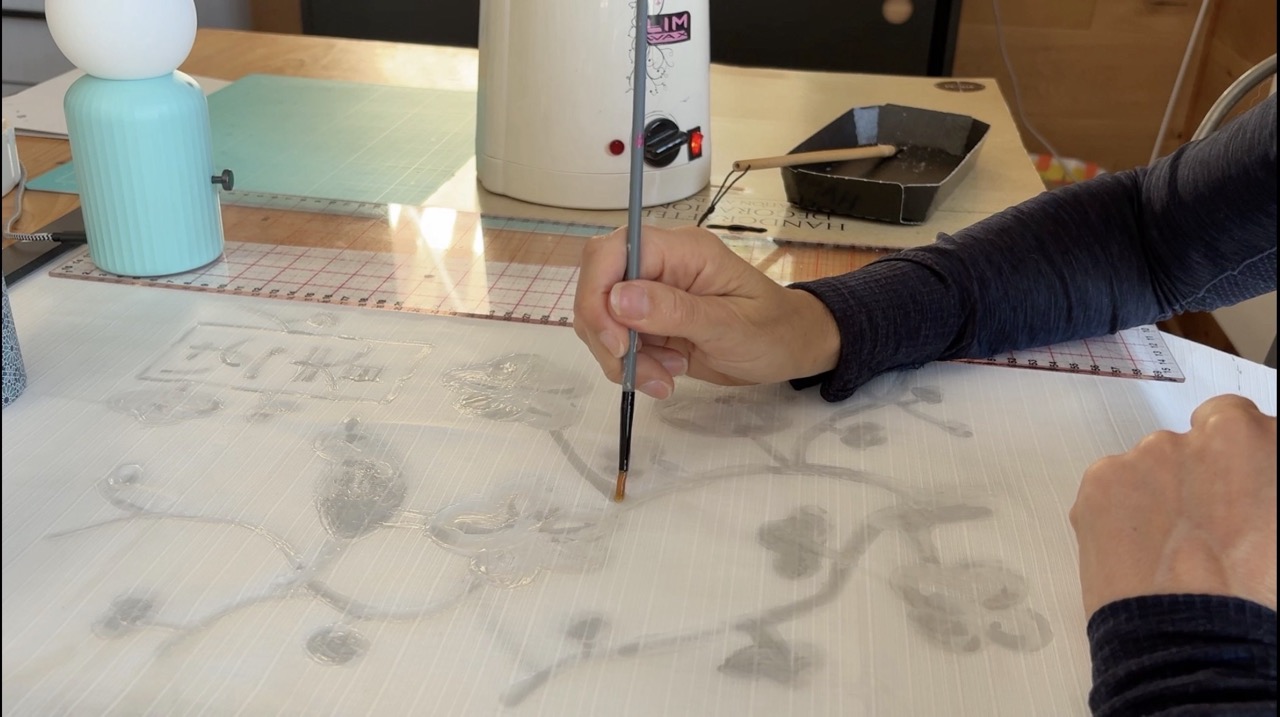
The initial idea was simple and very clear in my mind: to create a cyanotype depicting a cherry tree branch on the back of the garment, as well as in the heart area.
Through this work, I wanted to evoke a deeply Japanese concept:mono no aware.
This concept, which is difficult to translate perfectly, refers to a sensitivity to the impermanence of things—a gentle melancholy in the face of the world’s beauty, precisely because everything is fleeting. Cherry blossoms—the famous sakura—are perhaps its most emblematic expression.
The project was meant to be about acceptance: accepting the cycles of life, transformations, and transitions.
But as is often the case in creative processes, nothing went as planned
When the creation doesn't go according to plan
When I made the cyanotype, part of the image turned out underexposed. The color gradient, which I had hoped for was far from flattering.
The result was nothing like what I had imagined.
At the time, the disappointment was real. When you spend time designing an object, you project a very specific vision onto it. Seeing that vision distorted can be frustrating.
So I decided to put the project on hold for a few days.
Not to give up, but tomake room for another possibility.
Rebound: A New Creative Direction
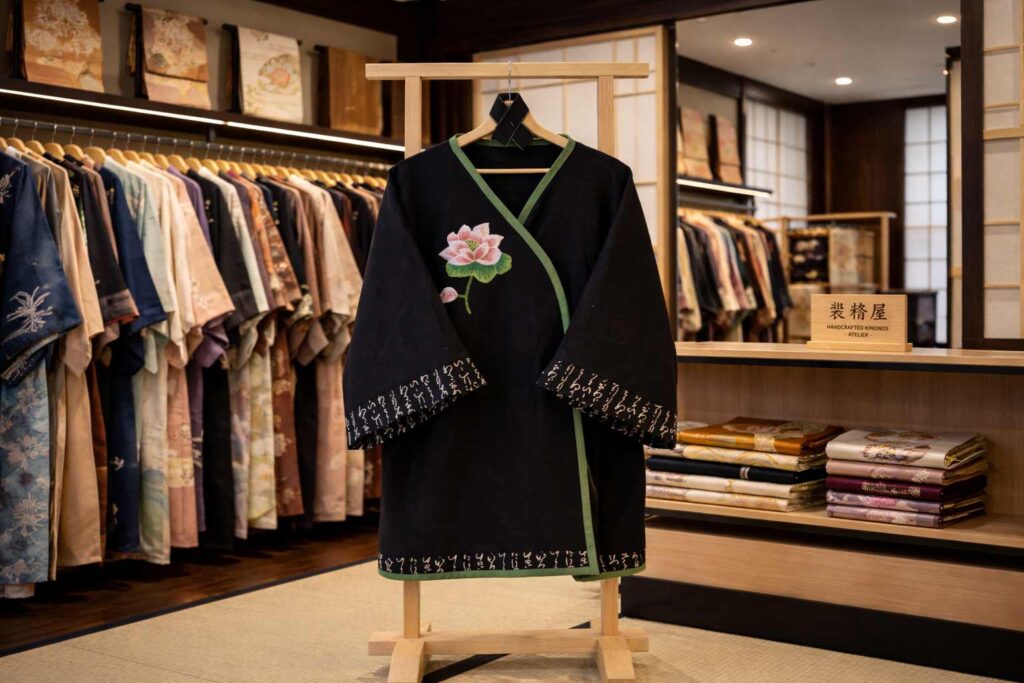
After taking some time to reflect, a new idea emerged. Black replaced Prussian blue, and the linen was paired with authentic Japanese fabric applied to the sleeves and hem of the garment. And where I had originally intended to convey impermanence through cherry blossoms, the design naturally turned to another powerful symbol of Asian culture:the lotus.
The lotus: a flower of transformation
The lotus flower holds powerful symbolic meaning in many Asian traditions.
Its botanical characteristics are fascinating: it grows in mud, emerges from the water, and then blooms into a perfectly pure flower.
Mud does not alter the flower.
On the contrary, it is part of the process.
This image is often used as a metaphor for inner transformation. Difficulties, failures, or detours are not insurmountable obstacles. They are part of the journey that allows something new to emerge.
In this sense, the lotus beautifully embodies the idea of potential
The connection between impermanence and rebirth
This change in direction in the project reminded me of something essential.
Impermanence is not just about things fading away—it is also the possibility of transformation.
In Japanese philosophy, mono no aware is an invitation to sense the delicate, transient beauty of all that passes—the seasons, blossoms, and fleeting moments of life.
Yet this sensitivity to the ephemeral also invites another idea: within every ending lies the seed of a beginning
In my project, the failure of the cyanotype was not simply a disappointment. It wasthe starting point for a new creation..
A textile metaphor
This linen kimono prototype became, almost in spite of itself, an allegory of the lotus.
The initial project encountered some resistance, a moment of confusion, a less luminous passage - like the mud in which a plant takes root.
Then came a new idea, a new direction, a different aesthetic.
Like the lotus that rises through the water to reach the light, the design has simply taken a different path.
The beauty of what is still latent
The lotus flower reminds us of something very simple, yet very profound.
Our greatest wealth does not lie solely in what is already visible, accomplished, or achieved.
It is also found inwhat still lies dormant within us.
In ideas that haven't yet come to fruition.
In projects that take a different direction.
In those moments when we choose to turn a failure into a new opportunity.
Like the lotus, some things simply need time to bloom.
And sometimes, just beyond a stumbling block liesthe promise of a different kind of beauty.